
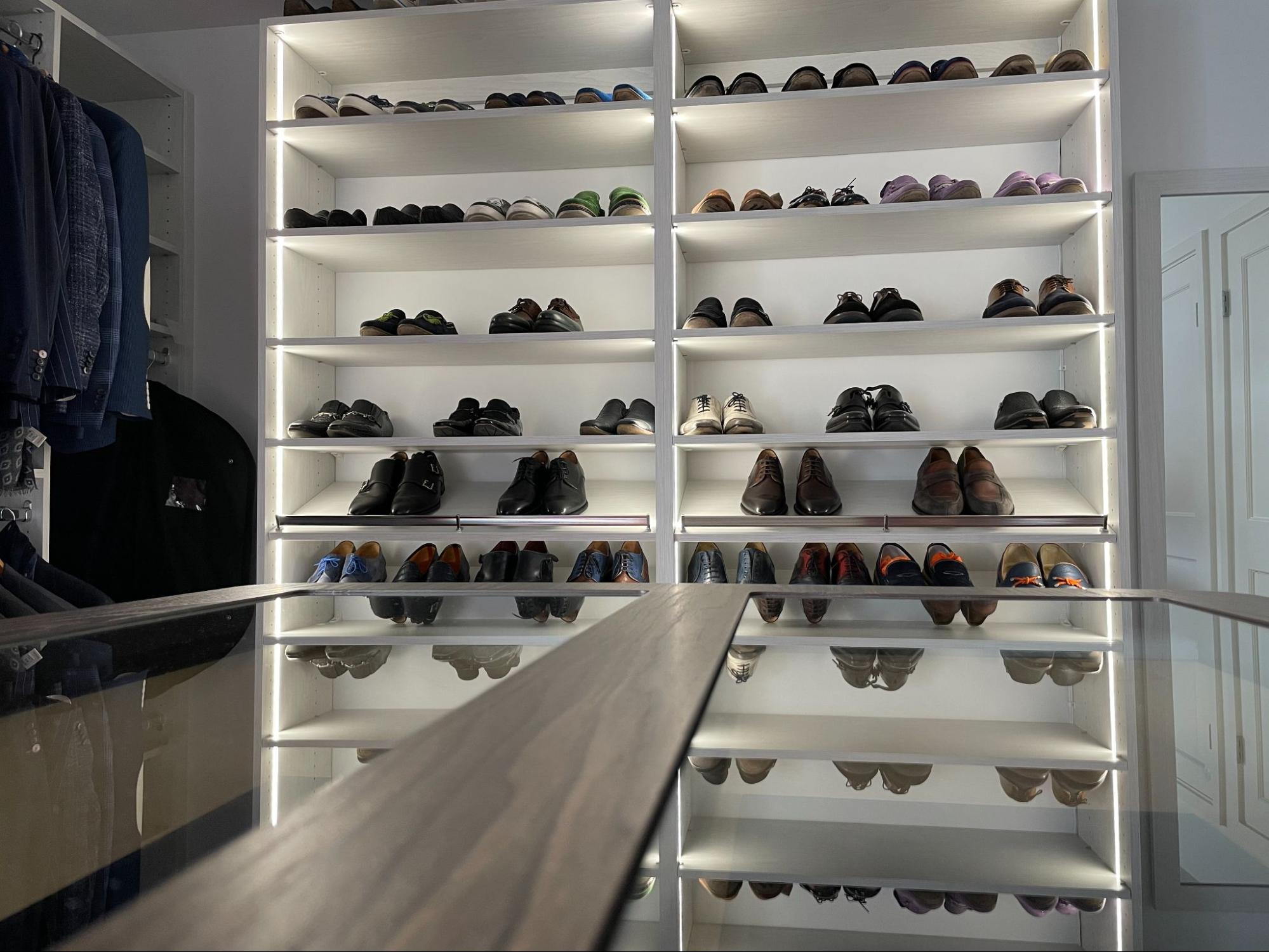
A well-organized closet starts with a clear system and the right storage. These tips cover everything from decluttering strategies to custom features that make organization effortless and lasting.
A disorganized closet doesn’t just create clutter. It costs you time every single day. Whether you’re getting dressed in the morning or hunting for something specific, a poorly organized space adds friction to your routine. The good news is that the right approach makes a real difference, regardless of your closet’s size.
Start by Clearing Everything Out
The most effective closet organization starts with a blank slate. Remove every item before you reorganize. This gives you a clear picture of what you actually own, what needs to go, and how much space you’re working with. It’s much easier to build an organized system when you’re not working around the existing mess.
Follow the one-year rule: if you haven’t worn or used something in the past year, it’s a strong candidate to donate, sell, or discard. Seasonal exceptions apply, but be honest with yourself.
Categorize Before You Put Anything Back
Once everything is out, sort items into clear categories before deciding where each group belongs. Grouping clothing by type (tops, bottoms, outerwear, formal wear, shoes) makes it far easier to assign logical zones within your closet and maintain the system long term.
-
Group everyday items at eye level for easiest access -
Store seasonal or rarely-used items on upper shelves -
Keep shoes off the floor with dedicated storage -
Use lower rods and shelves for children’s items so they’re accessible -
Designate a specific spot for accessories, belts, and bags
Maximize Vertical Space
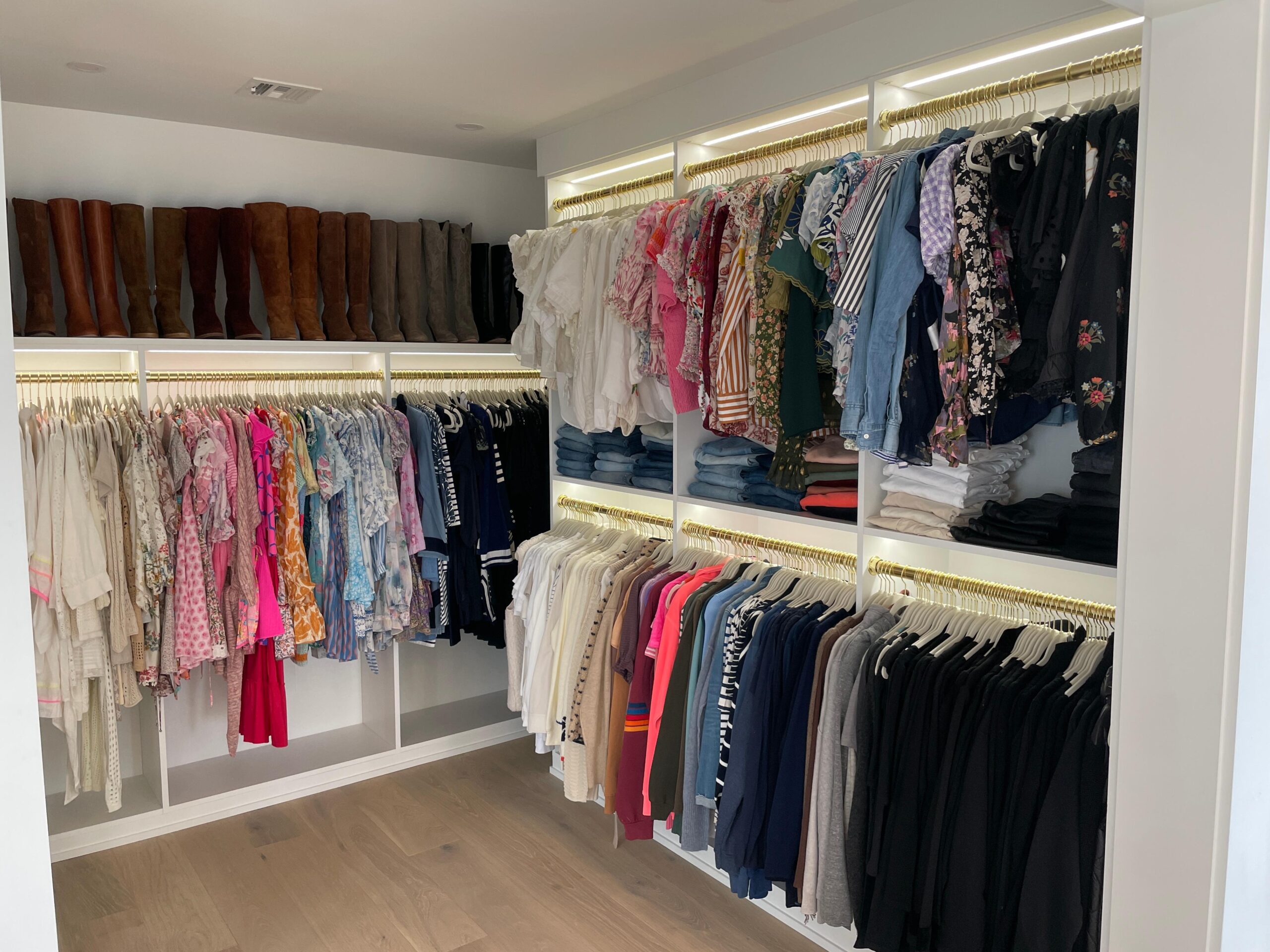
Most closets are underutilized from the middle up. Tall shelving, double hanging rods, and stacked storage configurations can dramatically increase your usable space without expanding the footprint. In a reach-in closet, this is especially important. Every vertical inch counts. A custom layout can use the full height of your walls, creating dedicated zones for folded items, hanging clothes, and accessories that would otherwise pile up on a single shelf.
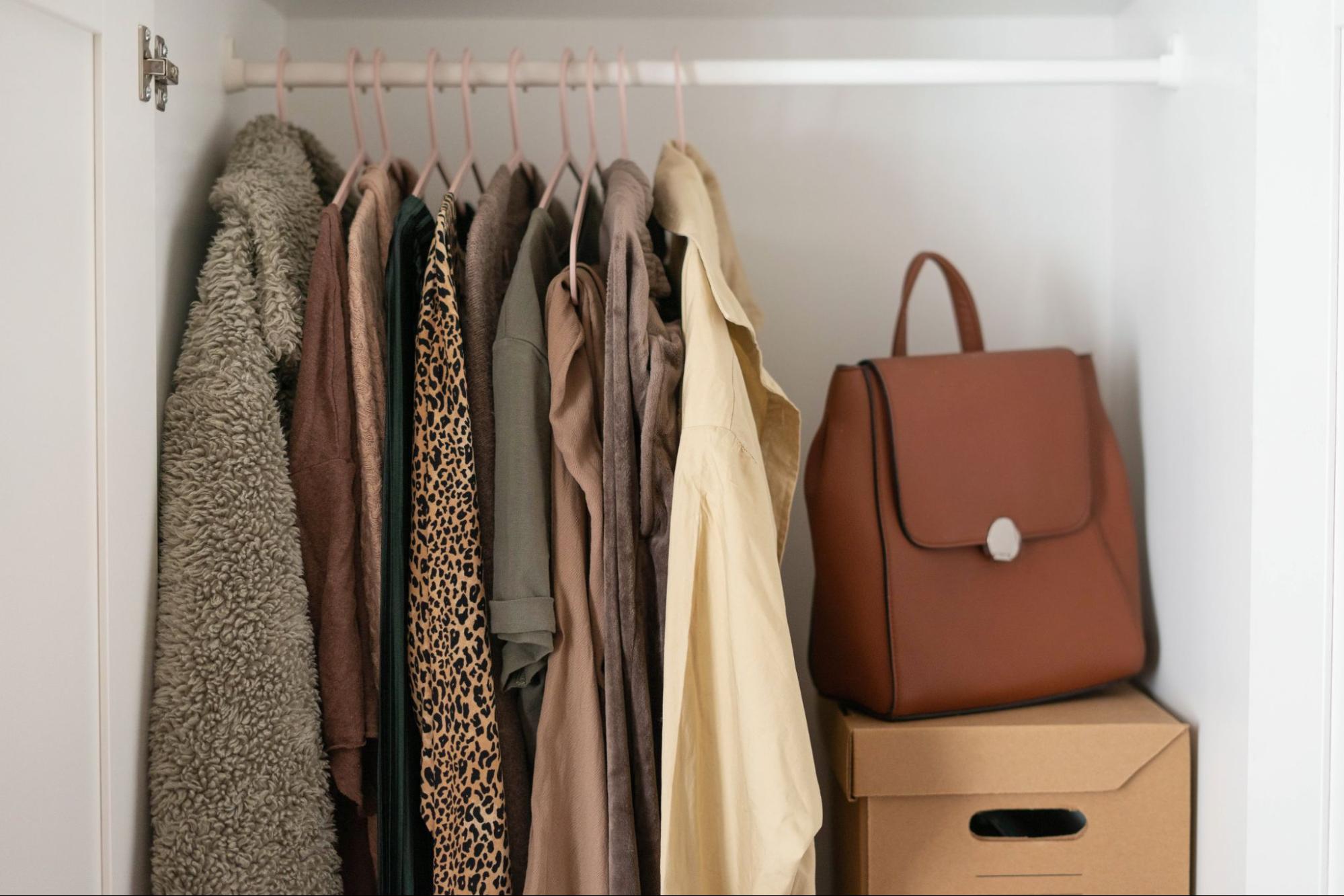
Use the Right Storage for Each Item
Generic storage bins and wire shelves rarely match how you actually use your space. Dedicated solutions like angled shoe shelves, pull-out drawers, valet rods, jewelry trays, and belt hooks keep items visible, accessible, and easier to put away. When putting something back is easy, the system maintains itself.
Upgrades That Make the Biggest Difference
Add dedicated shoe storage
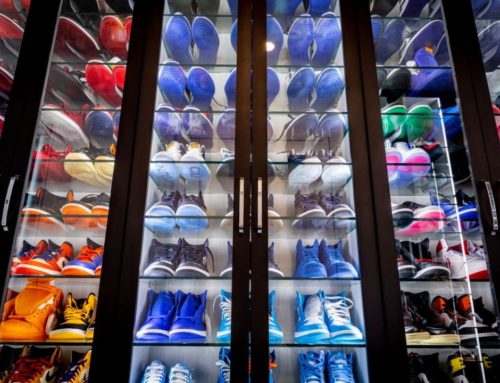
Shoes on the floor create visual clutter fast. Angled shelves, pull-out racks, or cubbies keep footwear visible, protected, and off the ground. Shoe storage solutions are one of the highest-impact upgrades in any closet.
Double your hanging space
Most closets have one hanging rod when two would fit. Double rods work perfectly for shirts, jackets, and folded pants, instantly doubling usable hang space in the same footprint.
Install built-in drawers
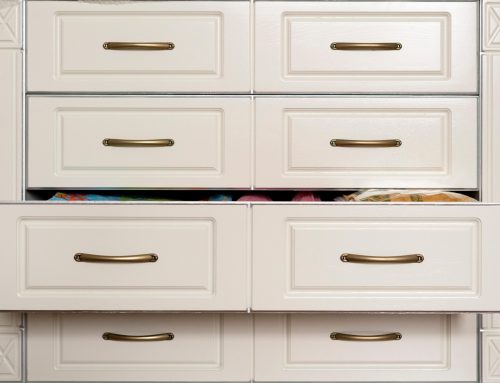
Folded items like sweaters, jeans, and workout gear belong in drawers, not on shelves where they collapse. Built-in drawers keep folded clothing neat without requiring constant re-folding.
Create a dedicated accessories zone
Belts, bags, jewelry, and scarves need their own home. A pull-out accessory drawer, hooks, or a dedicated shelf prevents these small items from causing disproportionate clutter.
Label and contain folded items
Open shelves invite mess over time. Labeled bins or baskets contain smaller folded items and give the closet a cleaner, more polished look.
Watch: Closet Organization in Action
See how a thoughtful layout and the right storage features come together in a real Boston Closet project.
A look at how custom storage transforms a real New England home.
When Organization Tips Aren’t Enough
Sometimes the problem isn’t how a closet is organized. It’s that the closet itself isn’t built for how you live. Generic shelving and standard layouts create friction because they weren’t designed for your specific wardrobe, habits, or space.
A custom closet system from Boston Closet removes that friction entirely. Every layout is designed around your storage needs, daily routine, and the actual dimensions of your space, built in-house at our Somerville, MA workshop and installed by our team.
If your closet consistently falls back into chaos despite your best efforts, it’s likely a design problem, not a discipline problem. Request a free quote to see what a custom system can do for your home.
Boston Closet services
Ready for a closet that stays organized?
Schedule a free in-home consultation. Our designers create a custom system built around your space, wardrobe, and daily routine.
Frequently Asked Questions
What is the best way to start organizing a closet?
Start by removing everything from the closet, then sort items into categories before deciding where each group belongs. This blank-slate approach makes it much easier to assign logical zones and build a system that lasts.
How do I keep my closet organized long term?
The key is making it easier to put things away than to leave them out. Dedicated spots for every item, accessible storage, and a quick seasonal edit once or twice a year will keep most closets tidy with minimal effort.
Is a custom closet worth it for organization?
For many homeowners, a custom closet is the single most effective organization investment they can make. When storage is designed around your actual items and habits, the system maintains itself far more easily than generic solutions.
What closet features help most with organization?
Built-in drawers, dedicated shoe storage, double hanging rods, pull-out accessory trays, and clear sightlines to everything you own. The goal is to make every item visible and easy to access.
How do I organize a small reach-in closet?
Use vertical space fully with tall shelving, add a double hanging rod for shorter items, keep the floor clear with dedicated shoe storage, and use the back of the door for accessories or hooks. A custom layout can maximize every inch.